Key facts
- Matta rice, also called Kerala red rice or Palakkadan matta, is a parboiled red rice widely eaten in Kerala and takes much longer to cook than white rice.
- Coconut oil is the most common cooking fat in Kerala households.
- Kerala’s government Supplyco outlets sell rice, pulses and coconut oil, with subsidised prices for ration-card holders.
- A starter kitchen for one or two men in a hostel needs only a pot, a frying pan, a ladle, a knife, a plate, a glass and a few airtight containers.
- Labelled, airtight containers keep ants and damp away from food stored in a shared kitchen during the Kerala monsoon.
Before you buy: check the kitchen
Every hostel kitchen is different. Before spending anything, find out:
- Is there a stove and gas connection residents may use, and how is gas paid for?
- Are there shared vessels, or does each person bring his own?
- Is there shelf space or a cupboard for each room, and a fridge?
- Are there rules about cooking times, non-vegetarian food or washing up?
Most arguments in shared kitchens are about three things: unwashed vessels, missing food and smells. Settle these on day one.
Choosing your rice
Rice is the base of most Kerala meals, and the shelf will confuse you at first.
| Rice | What it is | Good for |
|---|---|---|
| Matta (Kerala red rice, Palakkadan matta) | Parboiled red rice with a coarse grain and earthy taste | Everyday Kerala meals and kanji; filling, but slow to cook – soak it or use a pressure cooker |
| Jaya / white boiled rice | Common white parboiled rice | Everyday rice that cooks faster |
| Ponni / sona masoori | Finer white rice popular in Tamil Nadu and Karnataka | If you prefer softer rice |
| Raw rice (pachari) | Unparboiled white rice | Payasam, dosa and idli batter |
If you are not sure, buy a small pack of matta and a small pack of white rice and see which one your room-mates actually eat. Supplyco and Maveli Stores sell several of these at controlled prices – see supermarkets and grocery stores near Kalamassery.
The first-week list
Staples (buy once, last weeks)
- Rice – 5 kg to start
- Dal – toor or moong (cherupayar), 1 kg
- Green gram or black chickpeas (kadala) for breakfast curries, 500 g
- Atta or rava (semolina) for chapati or upma, 1 kg
- Cooking oil – coconut oil is the local default; buy sunflower oil if you prefer a neutral taste
- Salt, sugar, tea powder or coffee
- Turmeric, chilli, coriander and garam masala powders – small packs
- Mustard seeds and dried red chillies for tempering
Fresh (buy every few days)
- Eggs – the easiest protein for beginners
- Onions, tomatoes, green chillies, ginger, garlic, curry leaves
- One or two seasonal local vegetables – beans, cabbage, pumpkin, drumstick
- Bananas; milk and curd if there is a fridge
Basic kit (only what the kitchen lacks)
- One pot with a lid (or a small pressure cooker if matta rice will be daily)
- One frying pan or kadai, a ladle, a flat spatula, a knife and a small chopping board
- A steel plate, a glass and a spoon for yourself
- Airtight containers with your name on them
- Dish-wash bar and scrubber
Skip the gadgets in week one. A mixer, an induction cooktop or a rice cooker may be useful later – but check the hostel’s rules on electrical appliances first.
Five beginner meals with this list
- Rice, dal and an omelette – the default dinner.
- Kanji and payar – rice gruel with green gram and pickle; light, cheap and very Kerala.
- Egg curry with onion, tomato and coconut oil, eaten with rice or chapati.
- Upma with rava, onion and mustard seeds for breakfast.
- Vegetable thoran – chopped cabbage or beans stir-fried with grated coconut, mustard and curry leaves.
On days you do not cook, see eating well on a budget in Kalamassery.
Shared-kitchen manners
- Wash your vessels straight after eating – not the next morning.
- Keep food in sealed, labelled containers; in the monsoon, ants and damp arrive fast (see monsoon tips).
- Ask before frying fish or cooking strong-smelling food late at night.
- Agree how gas and common items like salt and oil are shared.
- Throw waste into the right bins; local bodies in Kerala expect waste to be segregated.
The kitchen at Ashraf Gents Hostel
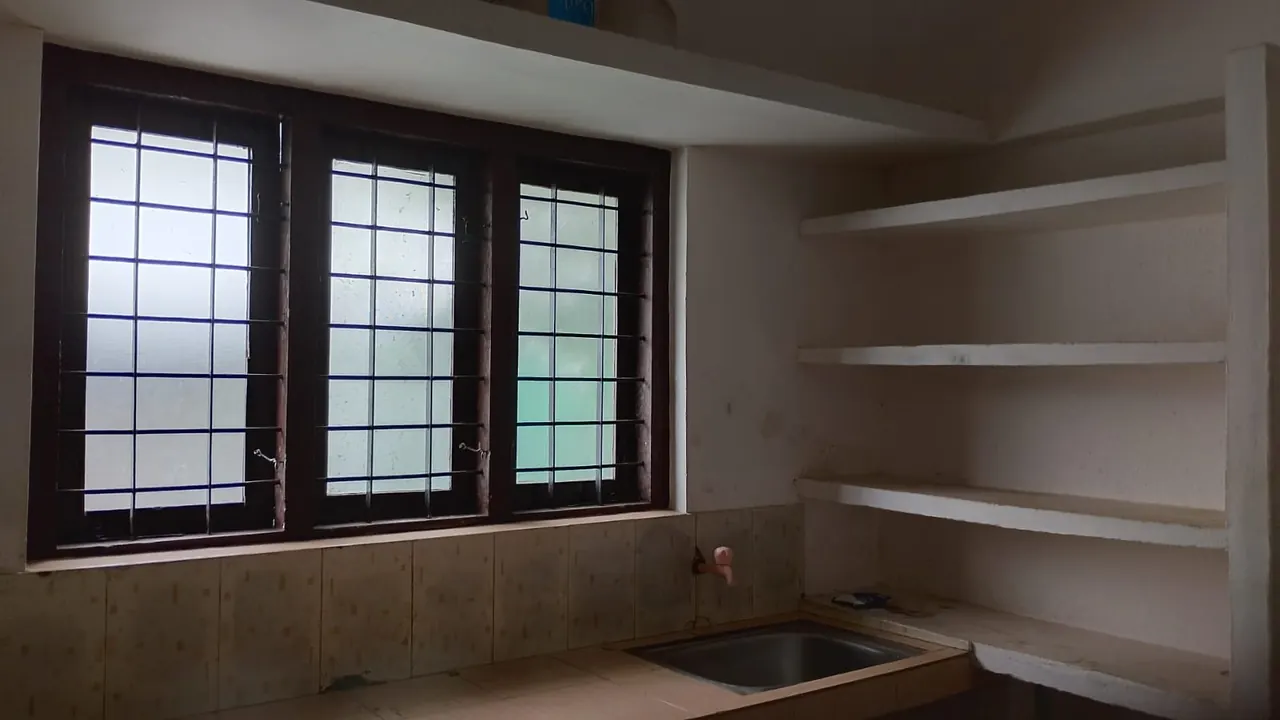
The photos of Ashraf Gents Hostel on NAD Road, Kalamassery, show a kitchen with a sink and shelves – see them on the photos section. That is enough for a small shared stock of rice, oil and spices. Whether there is a gas stove for residents, a fridge or shared utensils, and whether any meals are provided, is something to ask on the call (+91 90746 23855) before you buy.
It is a men-only hostel/PG for students, staff and working men; the indicative rate on its public profile is about ₹2,000–3,000 per head per month, negotiable, with one month’s advance, confirmed on the call. For the rest of your first days, follow the first-week checklist.
Frequently asked questions
What is matta rice?
Matta is Kerala’s red parboiled rice, also called Palakkadan or rose matta. It has a coarse grain and earthy taste and needs a longer cooking time than white rice.
Do I need a pressure cooker in a hostel?
It helps if you will cook matta rice or dal often, as both take long in an open pot. Check the hostel rules and what the kitchen already has first.
Is coconut oil the only cooking oil used in Kerala?
No, but it is the most common. Sunflower and other refined oils are widely sold if you prefer a neutral taste.
How much rice should one man buy for a month?
It depends on how often you cook. A man cooking rice once a day might use somewhere around 5–8 kg a month; start with 5 kg and adjust.
Related guides
Sources
- Wikipedia: Matta rice
- Wikipedia: Kerala State Civil Supplies Corporation (Supplyco)
- Saveur: How to stock a Keralan pantry
Facts about Ashraf Gents Hostel come from the hostel’s own profile and photos; rates are indicative and confirmed on the call. Last reviewed . How we write these guides: editorial notes. Map embeds © Google.