Key facts
- Government Medical College, Ernakulam and the Cochin Cancer Research Centre share one campus in HMT Colony, North Kalamassery, Kochi.
- In Kerala hospitals the family member who stays with a patient is usually called the ‘bystander’, and wards often allow one bystander pass per patient — confirm current rules at the ward.
- The Medical College campus is not on the Kochi Metro line; the nearest metro stations are Kalamassery and Cochin University on NH 544.
- For treatment that runs for weeks, many male bystanders take a monthly room nearby and keep the hospital for daytime duty.

First, understand the ‘bystander’ system
In Kerala, the relative who stays with an in-patient is called the bystander (or ‘koottirippukaaran’ in Malayalam). Government hospitals rely on bystanders to fetch medicines, take samples to labs, carry reports between departments and help the patient eat and wash. Wards commonly issue a pass for one bystander per patient and restrict how many visitors can come in. The exact rules change from ward to ward, so ask the nurse in charge on the first day and keep the pass with you.
As a man, you may not be allowed to stay overnight in a female ward. Families often split duties: a woman relative stays inside at night while the men handle the running about, pharmacy trips and paperwork by day. Plan this early instead of discovering it at 9 pm.
What to carry in your bystander bag
- A folder with the patient’s ID, referral letter, old reports, scan films and discharge summaries, plus photocopies — you will be asked for them repeatedly.
- Aadhaar and any health-scheme card, and a note of the patient’s insurance or scheme number.
- A steel tumbler, plate, spoon and a flask for hot water or kanji.
- A thin mat or bedsheet, a light shawl and a small pillow — corridors and waiting areas get cold under fans.
- Phone charger with a long cable, a power bank and some cash in small notes.
- A pen, a small notebook to log medicine times, and a plastic sleeve for prescriptions in the rain.
If you are arriving from outside Kerala, our Malayalam phrases for newcomers include a few that help at counters.
Food for you and the patient
Hospital diets are prescribed for many patients, so check with the nurse before bringing outside food in. For yourself, the junctions around the campus and along HMT Road have tea shops and small hotels serving rice meals, kanji and snacks. Our lists of places to eat near Kalamassery and HMT Junction and budget eating in Kalamassery are a good start.
If the stay will be long, being able to cook simple food — rice, kanji, a mild curry — saves money and suits patients on a soft diet. That is one reason some families move a male relative into a room with kitchen access.
Medicines, reports and errands
Ask first whether a medicine is available free at the hospital pharmacy before buying it outside. Keep every bill — some schemes reimburse later. Pharmacies cluster near most hospital gates; check that the brand and strength match the prescription exactly before you pay.
For banks, ATMs, photocopying and other errands, see our daily services directory and banks and ATMs guide.
Looking after yourself
Bystanders burn out quietly. A few habits help:
- Sleep in shifts with another relative if you can, even three or four hours away from the ward.
- Eat a proper meal once a day, not just tea and biscuits.
- Walk outside the building for ten minutes in daylight.
- Keep one person at home updated by message, so you are not answering twenty calls a day.
When treatment means weeks of daily trips — radiotherapy or repeated chemotherapy, for example — sleeping on a hospital bench stops being sustainable. That is when a room nearby becomes worth the money.
A monthly base for longer treatment: Ashraf Gents Hostel
Ashraf Gents Hostel is a men-only hostel at Ashraf house, NAD Road, at the signal in Kalamassery. Its public profile lists the Medical College and the RCC among places within about 3 km, so a male bystander can go back, wash, sleep properly and return for the next shift.
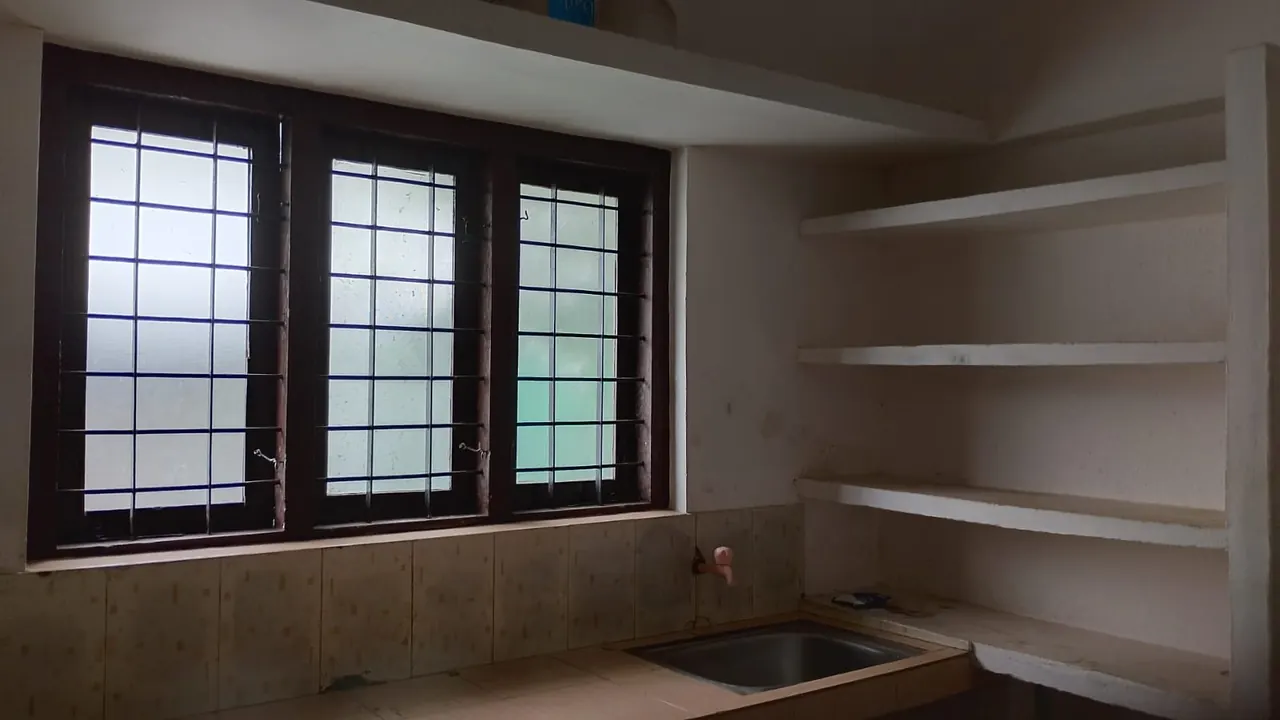
Photos show twin-sharing rooms with cots and mattresses, a kitchen with a sink and shelves and a tiled bathroom with a western toilet — see the gallery. The indicative rate from the public profile is about ₹2,000–3,000 per head per month, negotiable, with one month’s advance; confirm it on +91 90746 23855.
The hostel works month to month. If your relative is only in for a few days, tell us when you call — we will say honestly whether a short stay is possible. Women relatives cannot stay here.
Getting about
The campus is off the metro line, so you will mostly use autos, buses on HMT Road, or a two-wheeler. Families coming by train can get down at Aluva or Ernakulam — see Aluva station to Kalamassery and Ernakulam Junction to Kalamassery. For more on the cancer centre itself, read our CCRC guide.
Frequently asked questions
What is a bystander in a Kerala hospital?
The relative who stays with an in-patient to help with care, medicines and errands. Wards usually allow one bystander per patient with a pass; ask the nurse in charge for current rules.
Can I eat or cook near the Medical College?
There are tea shops and small hotels around the nearby junctions. For a long stay, a room with a shared kitchen lets you cook simple food; ask the hostel about kitchen use on the call.
Is there a metro to the Medical College?
No. The nearest metro stations are Kalamassery and Cochin University on NH 544; from there take a bus or auto.
Can I stay at Ashraf Gents Hostel only for a week?
The hostel runs on a monthly basis. Ask about short stays on +91 90746 23855 before you plan around it.
Related guides
Sources
- Wikipedia: Government Medical College, Ernakulam
- Asianet News: Cochin Cancer Research Center inauguration
- Wikipedia: Kalamassery metro station
Facts about Ashraf Gents Hostel come from the hostel’s own profile and photos; rates are indicative and confirmed on the call. Last reviewed . How we write these guides: editorial notes. Map embeds © Google.