Key facts
- NH 544 through Edappally and Kalamassery carries heavy through-traffic towards Aluva and the airport; commute times vary sharply with the hour.
- Kochi Metro runs from Aluva to Thrippunithura along NH 544, with stations at Kalamassery and Cochin University.
- Kerala’s south-west monsoon usually runs from about June to September.
- A lease for more than one year must be registered under the Registration Act, 1908, which is why 11-month agreements are common.

1. Choosing the room before checking the commute
A cheap room becomes expensive if it adds 90 minutes of traffic to your day. NH 544 between Edappally, Kalamassery and Aluva is one of Kochi’s busiest stretches, and the trip that takes 15 minutes at 2 pm can take far longer at 9 am. Infopark at Kakkanad, the High Court in the city and the industrial belt at Eloor pull in very different directions.
Instead: open Google Maps, set the departure time to your real shift start, and compare two or three bases. Our comparisons — Edappally vs Kalamassery vs Aluva and Kakkanad or Kalamassery — are a good start.
2. Paying before seeing, and without a receipt
Online listings with perfect photos and an “advance to hold the room” request are the classic trap. Even with genuine owners, cash paid with nothing written down becomes an argument at exit.
Instead: see the room or get a live video call, speak to the owner by phone, pay by UPI or bank transfer where possible, and get a receipt that says what the advance is and when it is returned. Details in advance, deposits and agreements.
3. Locking money into a flat too early
A shared flat with strangers you met on a group chat means a big advance, furniture to buy and bills to chase — and if one flatmate leaves, you pay his share.
Instead: spend your first few months in a hostel or PG while you learn the area and find people you trust. Then decide. See gents hostel or shared flat.
4. Treating the monsoon as ordinary rain
Kerala’s south-west monsoon, roughly June to September, brings days of continuous heavy rain, waterlogged roads, power cuts and damp clothes that never dry. Newcomers ride two-wheelers in it without proper rain gear, leave laptops near windows and walk through floodwater.
Instead: buy a good raincoat and an umbrella in week one, keep electronics in a dry bag, never drive through water you cannot see the bottom of, and stay away from swollen rivers. Monsoon living tips.
5. Living on tea, parotta and skipped breakfasts
Kochi’s tea shops are a joy, and that is the problem: eating out three times a day costs more than you budgeted, and many young men skip breakfast to save time. By the third month, money and health both suffer.
Instead: cook simple meals if your place has a kitchen, keep fruit and eggs around, and eat one proper rice meal a day. See eating well on a budget and what it costs a man to live in Kalamassery.
6. Ignoring the boring paperwork
Police verification for tenants, a local bank account, an updated Aadhaar address, a mobile connection that works indoors — none of it is urgent until the day it is. Then a job offer needs a local address proof or a bank refuses to update your details.
Instead: carry Aadhaar and photocopies, give ID for the hostel register, and clear the paperwork in your first fortnight. Our first-week checklist and police verification guide list what to do.
7. Staying a stranger
Single men who only commute and sleep get lonely fast, and loneliness makes every other problem heavier. Not learning a word of Malayalam keeps you an outsider at the shop and the bus stop.
Instead: learn a few phrases (30 Malayalam phrases), join a ground or gym, explore on your day off — cheap weekend plans — and say yes when roommates invite you along.
Where Ashraf Gents Hostel fits
Ashraf Gents Hostel is a boys’ hostel and PG for students, staff and working men at Ashraf house, NAD Road, at the signal in Kalamassery — a local road off the busier highway side of town. Its public profile lists the Medical College, RCC, NUALS, the Science Park, the Seaport–Airport Road, the Nippon skill centre and the Adani port area as within about 3 km.
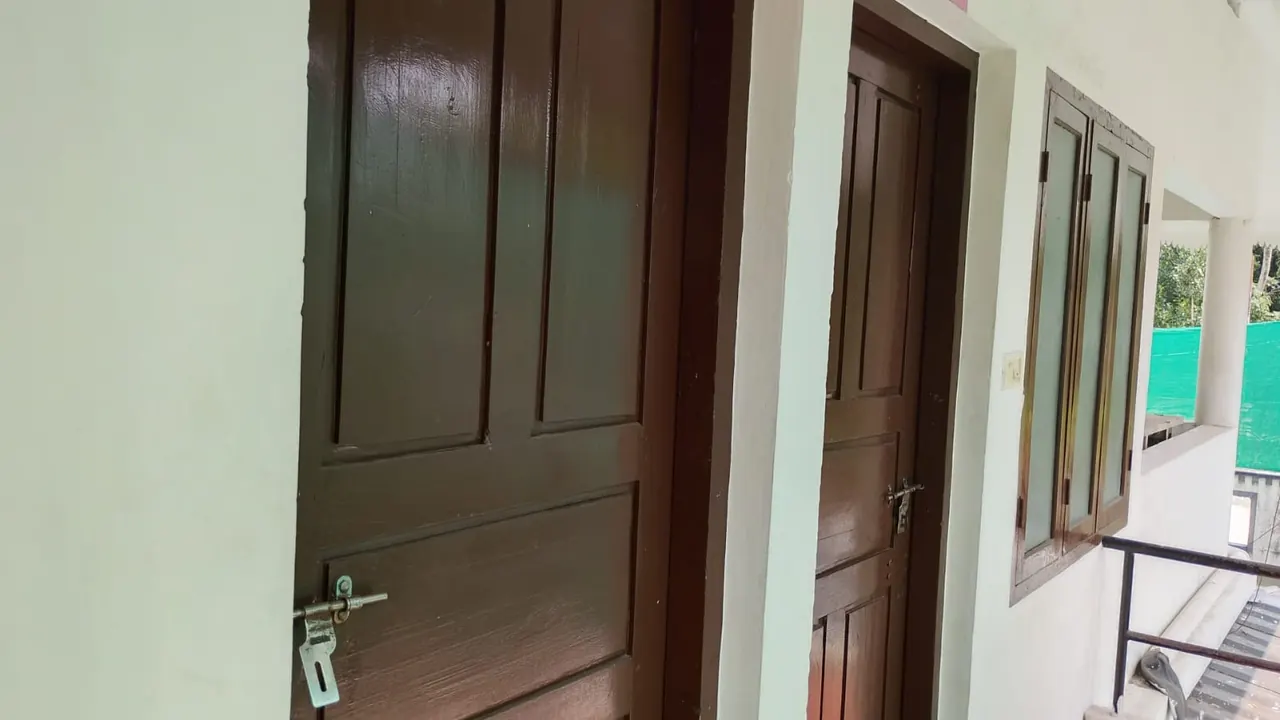
The indicative rate is about ₹2,000–3,000 per head per month, negotiable, with one month’s advance — confirmed on the call (+91 90746 23855). Photos show twin-sharing rooms with cots and mattresses, a kitchen and a tiled bathroom: see the photos. Ask about anything not shown, such as food, Wi-Fi or entry timings, before you decide.
Frequently asked questions
Where should a single man live in Kochi?
It depends on where you work or study. Check the commute at your real travel time; Kalamassery suits people working or studying in the north of the city, the industrial belt or towards the airport.
Should I take a hostel or a flat when I first arrive?
A hostel or PG is usually easier for the first months because the advance is smaller and you need no furniture. Move to a flat later if it suits you.
How do I avoid rental scams?
Do not pay to hold a room you have not seen or confirmed with the owner by phone. Pay traceably and get a receipt.
When is the monsoon in Kochi?
The south-west monsoon usually runs from about June to September, with heavy rain and occasional waterlogging.
Related guides
Sources
- Wikipedia: Kochi Metro
- Wikipedia: National Highway 544
- Wikipedia: Southwest monsoon
- CaseMine: Compulsory registration under Section 17 of the Registration Act, 1908
Facts about Ashraf Gents Hostel come from the hostel’s own profile and photos; rates are indicative and confirmed on the call. Last reviewed . How we write these guides: editorial notes. Map embeds © Google.